
 Image 1 of 1
A sewing machine and an umbrella meet on a dissecting table. The earth is blue like
an orange. Ask these images what they mean and they will politely decline. They have better things to do: they show reality misbehaving, spilling over the containers we built to keep it tidy.
Depth psychology has long treated the image as a message from elsewhere, a symptom to be read or a dream awaiting its key. The Surrealist image proposes something more unsettling: that the surreal isn’t elsewhere at all, but is this world caught in the act of exceeding itself; and that images aren’t delivered but made, events that rearrange the furniture of thought.
This course takes that proposal seriously, as theory and as method. Surrealist writing techniques are treated as a form of knowledge in their own right, a way of thinking the image from inside its workings rather than through a magnifying glass. The Surrealists (Aragon, Breton, Desnos, Cahun, Césaire and the dissident Bataille) are read as thinkers alongside Jung, Hillman, Deleuze, Bachelard and others, technique and theory each reaching what the other cannot. No craft, no critique, no experience needed. Umbrellas welcome; questions about their meaning, less so.
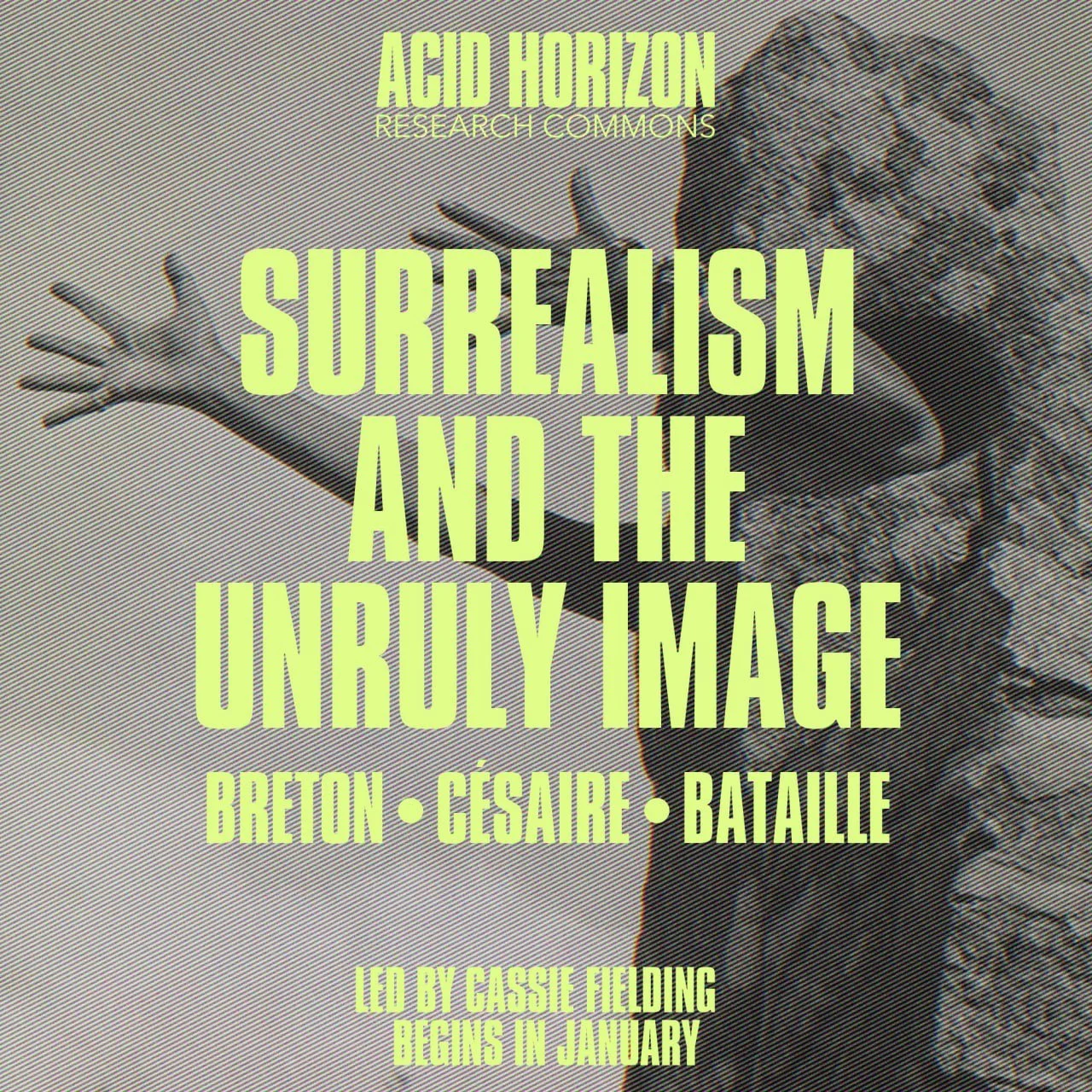
Never Ask the Umbrella What It Means: Surrealism and the Unruly Image is a four-week intensive. Each 90-minute session combines a short lecture, live surrealist writing exercises and open discussion.
Cassie Fielding is a surrealist poet and a doctoral researcher in Psychoanalytic Studies at the University of Essex. Her research brings surrealist poetic practice into conversation with complex psychology, exploring how the making of images transforms the one who makes them. Her essay “The Surreal Self: Oddity as the Art of Selfing” appears in the London Arts-Based Research Centre’s Strangeness and Oddities, and she has a chapter on surrealist methodology forthcoming in an edited volume on weird methodologies. She is the founder of Vesica Press, a publisher of hybrid creative-critical writing, and teaches “The Unsayable”, a series of research labs on surrealism, psychology and the image.
All sessions meet from 6:00–7:30 PM GMT via Zoom.
Session 1: January 9 — The Stupefying Image: meaning versus force; and the image that breaks recognition
Session 2: January 16 — Words Make Love: sound, nonsense and language as image
Session 3: January 23 — Disavowals: masks, personification and who speaks the image
Session 4: January 30 — Magnetic Fields: does the surrealist image expose the myth of interiority?
Students will receive permanent access to all recorded lectures and a recurring Zoom link for all sessions. Upon enrolment, download the welcome package and use the materials to navigate to your classroom.